Fun Facts: Crusades
"During the crusades all were religious mad, and now all are mad for want of it."
—J. G. Stedman
The beginning of the Crusades can be found in the defeat of the Byzantines
at the Battle of Manzikert in 1071, which cost them most of Asia Minor.
The Byzantines lost the battle because the Turkish Sultan, on the edge of
defeat, bought Byzantine's mercenaries, leading to a crushing Turkish victory,
and causing the Byzantines to ask the Pope for help to recover the territory.
As early as 1074, Pope Gregory VII entertained plans to launch a military
expedition to help, but nothing came of it.
(source)
In the first Crusade in 1096, two armies of beggars set out alongside
the knights, one army from southern France and the other from Germany,
regions that had been suffering from famine recently. When travelling towards
Palestine, these armies plundered many cities on the Rhine and in southern
Germany, killing Jews and in some cases Christians. They never reached the
Holy Land; they were defeated in Turkey; many were slaughtered and
the rest sold into slavery.
(source)
In 1113, Adelaide, who at the time was regent of Sicily, married King
Baldwin of Jerusalem. This marriage was very advantageous to Baldwin,
who was able to use Adelaide's dowry to pay off the crusader knights of
the city for its defense. Four years later, by which time all of Adelaide's
money had been spent, Baldwin became sick. He then announced that he
blamed his sickness on the fact that his marriage was bigamous. Unknown
to Adelaide, Baldwin's wife Arda had been in Jerusalem the last four years,
and Baldwin had placed her in a nunnery just before marrying Adelaide.
Baldwin was granted an annulment and Adelaide went back to Sicily impoverished.
(source)
One of the most unusual military maneuvers ever was performed
in 1191, during the third Crusade, when Richard the Lion-Hearted
captured the city of Acre.
The inhabitants were barricaded inside, so King Richard had
his soldiers throw 100 beehives over the walls. The people
in the fortress surrendered immediately.
(source)
Around 120,000 people were attracted to the First Crusade.
(source)
In 1099, after capturing the city of Jerusalem, the crusaders massacred around
70,000 Jews and Muslims in the city.
Jerusalem, after having been in Crusader hands for nearly 100 years,
was lost shortly after a major victory by Saladin over the Crusader
army at the Battle of the Horns of Hattin on July 4th, 1187.
One of the main causes of the Crusader's defeat is that the Crusader
army set off from Acre towards the Sea of Galilee, through the desert
without bringing adequate supplies of water. The horses became
lethargic and collapsed, and the men undisciplined. Some surrendered
to the Saracens in exchange for water. During the battle, the foot soldiers
broke ranks, attempting to reach a well, where they were felled by
Saracen arrows.
(source)
Nowadays politically neutral doctors such as those of the Red Cross are
well-known. The first politically neutral doctors appeared during the
third Crusade. After Saladin's victory in 1187, he stipulated that the
doctors on the battlefield would come to the aid of all wounded, regardless
of whether they were Muslim or Christian. He also organised doctors to
visit the camps of prisoners and allowed foreign doctors, such as Richard
the Lion-Hearted's doctor, Ranulphe
Besace, to visit prisoners.
(source)
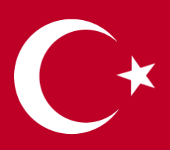
During the Crusades, the symbol of the star and crescent moon was commonly worn—by Christian soldiers. The Star and Crescent originally symbolized the city of Constantinople (now Istanbul), and was first used as a Muslim symbol only after the Turks captured the city in 1453.
(source)
The Crusader kingdoms imposed a lighter tax burden on their Muslim subjects
than did many Muslim lands.
(source)
The Crusaders were able to reconquer Acre, a coastal town eighty
miles north of Jerusalem, in July 1191, only after 100,000 on both
sides had been killed.
(source)
King Richard the Lion-Hearted of England spent only six months of his ten-year reign in England, being there only briefly in 1189 and 1194. Much of his reign was spent either on the Third Crusade or in France.
(source)
In 1209, in the bloody Crusade against the Albigenses, a French
army took the town of Beziers, near the Mediterranean coast. The
town was put to the sack, but the question arose as to how to tell
which of the town's inhabitants were heretics and which were good
Christians. Simon IV de Montfort (or perhaps a legate of Pope
Innocent III) proposed an easy solution. "Kill them all," he
said, "for the Lord will know his own." And so several tens of
thousands of men, women, and children were killed.
(source)
At the Battle of Damascus, during the Crusades,
the wife of one of the Arab archers who was killed in battle picked up
his bow and immediately joined the conflict. She hit the Crusaders'
standardbearer with one arrow and the commander with another, damaging
morale and contributing to the Arab victory.
While oranges appear frequently in major Renaissance paintings, they
were not eaten at the Last Supper because they were not available.
Returning Crusaders reported seeing oranges in the Holy Land, which may
have influenced Titian, Boticelli, and other artists. However, these
reports were from a time over 1,000 years after the Crucifixion. During the
intervening time, citrous fruits had been introduced to the Mediterranean
countries from China.
Honey was used as a synonym for anything pleasant ("land of milk
and honey") in ancient and mediaeval times because it was about the
only sweetener then available to the West. Sugar didn't reach Europe
in quantity until the twelfth century, when returning Crusaders
brought it with them from the East.
The Children's Crusade was neither a crusade nor made up
primarily of children. It was an unsanctioned popular movement formed
in 1212 by Nicholas of Cologne. Thousands of common people, including
women and children, followed him to Genoa, where he arrived on August
25th. When the Mediterranean did not part for Nicholas as
he had expected, many of his followers left. The rest marched to
Rome, where Pope Innocent III praised the group's zeal but also
released them from their "vows". Around the same time, Stephen,
a 12-year-old boy from Cloyes in France, had seen a vision of Jesus,
and went to Paris to deliver a message to the French king, gathering a
large crowd of common people as he went.
(source)
The leaders of the Christian and Muslim armies during the Third Crusade,
Richard the Lion-Hearted, King of England and Saladin, Ayyubid Sultan,
had a reputation for being chivalrous. For example, at the Battle of Arsuf,
when Richard lost his horse, Saladin sent him two replacements.
During the Third Crusade, Holy Roman Emperor Frederick Barbarossa drowned
while crossing a river in Turkey on horseback.
(source)
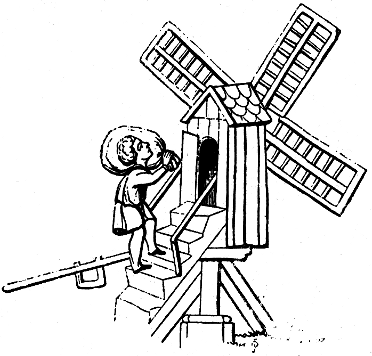
Until the twelfth century, when returning Crusaders brought
knowledge of them, windmills were likely unknown in Europe. They
thereafter became familiar landmarks in Holland, England, France,
and Germany. The first windmill in England was built in 1191, when Dean
Herbert decided to apply wind power to his landlocked farm. He used it
successfully to grind corn until the local abbot had it destroyed.
Through the history of the Crusaders' Kingdom of Jerusalem, Muslim inhabitants outnumbered the Christian inhabitants.
A method of hardening steel swords in the Middle Ages was the
damascene process of thrusting a superheated blade in the body of
a slave and then into cold water. Crusaders discovered, to their
dismay, that swords made of Damascus steel were more resilient and
harder than those of European manufacture. Europeans did not
discover the secret until 500 years after the Crusades, however,
when it was discovered that thrusting a red-hot sword into a mass
of animal skins soaking in water had a similar effect to the
Damascus method. The nitrogen given off by the skins in the water
produces a chemical reaction in the steel.
(source)
The origin of the lemon tree is unknown. Crusaders discovered the trees
in the holy land, but the trees are not from there originally.
The Fourth Crusade, which was launched by Pope Innocent III in 1202,
ostensibly to liberate the Holy Sepulchre, instead became the most
profitable business transaction in the history of Venice. Not only
were the Venetians to receive 85,000 silver marks of Cologne (around
$3 million in today's money) but also half of the spoils of all battles.
The crusaders never made it anywhere near the holy land. First they
conquered Dalmatia, which had recently rebelled against
Venice. They then sacked Constantinople in 1204 and sailed away with
the enormous riches of the city.
(source)
There is an order of crusading knights still in existence. After the
fall of the Crusader territories in the Holy Land, the Knights Hospitaller
fled to Rhodes, from which the Turks evicted them in 1522. They went
to Malta, where they took part in holy leagues and their mission to care
for the poor and sick, including building a large hospital in Valetta.
They were expelled in 1798 by Napoleon, and fled to Rome, where they
became a government in exile. Known as the Knights of Malta, they still
issue passports and are recognised as a sovereign state by some countries.
(source)
The use of canes or walking sticks was at one time forbidden in Rome by Imperial edict, except to persons of patrician rank, thus making their use a privilege that came to be popular among the nobility. During the Middle Ages the use of canes as a status symbol died out, but was re-established by pilgrims and soldiers returning from the Holy Land during the Crusades.
(source)
Thirteenth-century German crusaders fighting to conquer Livonia
(modern-day Latvia)
justified that crusade by claiming the land as Our Lady's dowry.
In the first half of the thirteenth century, there was a higher intensity
of Crusading activity than at any other time.
This period saw Crusades against Muslims in
Egypt, Palestine, and Iberia, Orthodox Christians in Constantinople, heretics
in France, Germany, and Hungary, non-Christian Baltic people, Mongols
(although Crusader armies never met the Mongols in the field), and various enemies
of the Pope.
(source)
King Juan Carlos I of Spain holds the title "King of Jerusalem",
a relic from the Crusades.
(source)
Contrary to the common belief that Crusaders were mostly knights who were
not in a position to inherit land (such as second, third, or younger sons)
and so sought material gain, recent research has discovered the crusading
knights were generally wealthy, landed men who nonetheless gave up everything
to go on a Crusade. Most likely, they actually did see the Crusades as a
means of attaining spiritual wealth, rather than material wealth.
The following curious law was enacted during the reign of Richard I., for the
government of those going by sea to the Holy Land: "He who kills a man on
shipboard, shall be bound to the dead body and thrown into the sea; if the man
is killed on shore, the slayer shall be bound to the dead body and buried with
it. He who shall draw his knife to strike another, or who shall have drawn
blood from him, to lose his hand; if he shall have only struck with the palm
of the hand, without drawing blood, he shall be thrice ducked in the sea."
(source)